Grow slow, grow strong
A Great Dane puppy can reach half its adult weight by about four months.[26] Steady growth on a measured, large-breed puppy food, with no extra calcium, gives bones and joints the best chance.
≈ 50%
of adult weight at 18 weeks, about 27 kg for a 54 kg adult
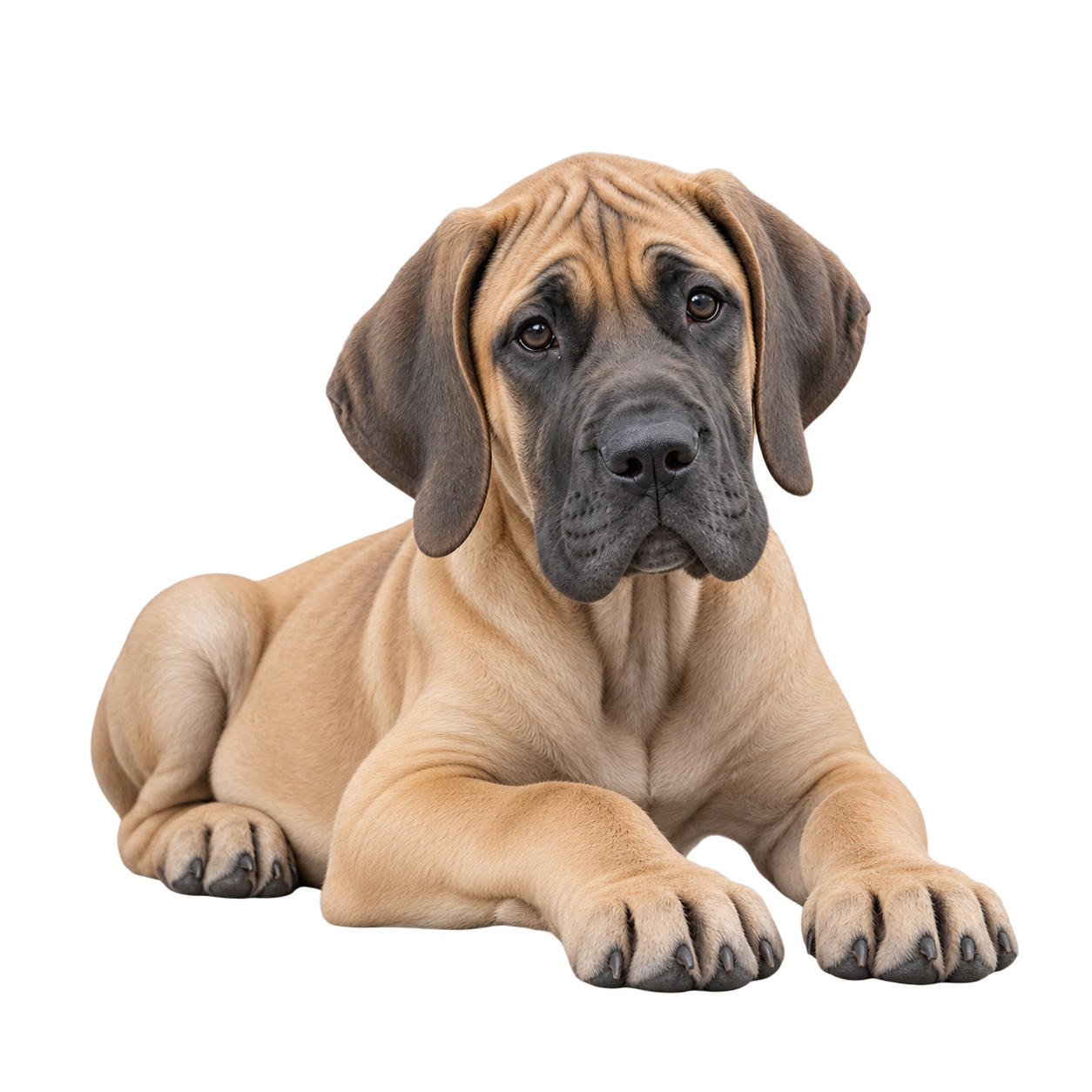
Illustrative only: a curve through two published Great Dane milestones, not a growth standard.[26] Your vet and your puppy's weekly weights are the real guide.
The four rules
Feed a complete and balanced food whose label says it suits growth 'including growth of large size dogs'. Avoid foods labelled 'except for growth of large size dogs'.[8,2,6]
Do not add calcium, phosphorus or vitamin D to a complete growth diet. In controlled studies, extra calcium and vitamin D disturbed bone development in Great Dane puppies.[8,15,17]
Measure meals rather than leaving food out, weigh your puppy regularly and keep them lean. Slow, steady growth is the goal.[8,13,30]
Split the day's food into at least two meals for life, and do not use a raised bowl.[33,38,34]
Energy and choosing a food
Giant-breed puppies do not need extra-rich food. They need the right amount of a food made for large-breed growth.
Vets start from the resting energy requirement (RER): 70 × body weight in kg raised to the power 0.75, in kcal per day. Life-stage factors multiply it up.[7,9]
- Healthy adult dogs: about 1.6 × RER if desexed, 1.8 × RER if entire, and 1.4 × RER for dogs that gain weight easily.[7]
- Puppies: about 3 × RER until 4 months of age, then 2 × RER.[7]
- These are starting points. Individual dogs can need 30% more or less than predicted, and some sources say up to 50%.[7,9]
The NRC (2006) growth equation uses how close the puppy is to its expected adult weight: 130 × weight⁰·⁷⁵ × 3.2 × (e^(−0.87 × p) − 0.1), where p = current weight ÷ expected adult weight.[10,11]
- Published work suggests the NRC equation can overestimate energy needs, especially in younger puppies.[10]
- A Swiss study of eight breeds, including Great Danes, found 80–90% of the recommended energy was enough for most puppies.[12]
- Overfeeding speeds up growth, which is not compatible with proper skeletal development and adds to obesity later in life.[8]
- Look for a statement that the food meets AAFCO profiles for growth 'including growth of large size dogs (70 lb or more as an adult)', which is about 32 kg. That claim caps calcium at 1.8% of dry matter.[2,1,6]
- In Australia, the pet food standard AS 5812 uses AAFCO nutrient profiles as its benchmark for 'complete and balanced' claims.[5]
- One review by a veterinary nutrition technician advises avoiding calorie-dense, high-fat foods for large-breed puppies and suggests 3,200–4,100 kcal/kg.[13]
- Large- and giant-breed puppies are more sensitive to both too much and too little calcium while their bones are growing.[6,18]
- In a controlled study, Great Dane pups fed 14.6%, 23.1% or 31.6% protein (dry matter) with equal energy showed no differences in calcium metabolism or skeletal development.[14]
- The authors concluded that dietary protein is unlikely to cause osteochondrosis. The recognised dietary risk factors are excess energy and excess calcium.[14,19]
- Minimum protein for growth: 22.5% of dry matter (AAFCO), or 25% for early growth (FEDIAF). For adult maintenance, AAFCO sets 18%.[1,3]
- In a lifelong study of 48 Labradors, dogs fed 25% less than their pair-mates lived longer and developed signs of chronic disease later. Great Danes were not studied, so the size of any benefit for them is unknown.[21]
- Large and giant breeds reach skeletal maturity at about 10–16 months. One review suggests switching to a large-breed adult food at 11–12 months. Ask your vet about timing for your dog.[8,13]
The calcium window is narrow
Check your puppy food
Type the calcium and moisture from the label's analysis panel.
Label figures are usually 'as fed' (including moisture). To compare with the dry-matter figures above, divide by the dry-matter fraction. For example, 1.2% calcium in a food with 10% moisture is 1.2 ÷ 0.9 ≈ 1.33% DM.[1]
Why it matters
- Dogs cannot adjust how much calcium they absorb from the gut to match supply, and young puppies absorb much of it passively. That leaves growing large-breed puppies exposed to both excess and shortage.[18,13]
- Great Dane pups fed three times the recommended calcium developed disturbed bone formation, with changes comparable to osteochondrosis and slower bone remodelling.[15]
- In another Great Dane trial, high calcium without matching phosphorus caused rickets-like changes, and osteochondrosis-like lesions appeared later. High calcium with high phosphorus slowed growth and also caused osteochondrosis-like changes.[16]
- Very high vitamin D₃ intake in Great Dane pups disturbed growth-plate bone formation, even without signs of toxicity.[17]
- Adding calcium, phosphorus or vitamin D to a complete and balanced growth diet is rarely necessary and may be harmful.[8]
- Supplements pushing calcium above about 3% of dry matter worsened osteochondrosis signs in rapidly growing large-breed dogs.[7]
- Veterinary guidance on growing large breeds is consistent: avoid excess calories and avoid supplementing calcium, phosphorus or vitamin D.[22,8]
| Guideline & stage | Calcium min | Calcium max | Phosphorus | Ca:P ratio |
|---|---|---|---|---|
| AAFCO[1,2]Growth, puppies expected to be ≥ 70 lb (~32 kg) as adults | 1.2% DM (3.0 g/1000 kcal) | 1.8% DM (4.5 g/1000 kcal) | 1.0% DM (2.5 g/1000 kcal); max 1.6% DM | 1:1 to 2:1 |
| FEDIAF[3]Early growth, under 14 weeks | 1.0% DM (2.5 g/1000 kcal) | 1.6% DM | 0.9% DM (2.25 g/1000 kcal) | up to 1.6:1 |
| FEDIAF[3,4]Late growth, breeds over 15 kg adult weight, to about 6 months | 1.0% DM (2.5 g/1000 kcal) | 1.8% DM | 0.7% DM | up to 1.6:1 |
| FEDIAF[3,4]Late growth, breeds over 15 kg, after about 6 months | 0.8% DM (2.0 g/1000 kcal) | 1.8% DM | 0.7% DM | up to 1.8:1 |
- Figures differ between AAFCO and FEDIAF, so treat them as a safe band, not a single target. One veterinary nutrition technician's review recommends a tighter 0.8–1.2% calcium (dry matter) for large-breed puppies.[1,3,13]
- Label figures are usually 'as fed' (including moisture). To compare with the dry-matter figures above, divide by the dry-matter fraction. For example, 1.2% calcium in a food with 10% moisture is 1.2 ÷ 0.9 ≈ 1.33% DM.[1]
An uncommon disease of young, growing, usually large- or giant-breed dogs.[24,22]
- Signs: painful swelling near the ends of the leg bones, usually on both sides and most often just above the wrists, with lameness, fever, poor appetite and lethargy.[24,22]
- The cause is unknown. Viral infection, vaccination, genetics and nutrition have all been proposed, but none is proven.[24,22]
- Mild and moderate cases usually do well. Severe cases can be life-threatening and need intensive care.[24,25]
- Part of management is stopping any supplements beyond a balanced, age-appropriate diet.[22]
Inflammation of the long bones in young, rapidly growing large and giant breeds, usually between 6 and 16 months of age.[22]
- Signs: sudden lameness that comes and goes and can involve one or several bones, sometimes with fever, poor appetite, and pain when the bone is pressed.[22]
- The exact cause is unknown. Genetics, stress, infection, and nutritional, metabolic and autoimmune causes have been suspected.[22]
- Panosteitis is self-limiting and usually resolves by skeletal maturity, but it can recur during growth.[22,25]
A fault in how joint cartilage turns into bone, affecting the shoulder, elbow, stifle (knee) and hock.[23]
- The exact cause is unknown. Excess nutrition, rapid growth, trauma and inheritance are suspected contributors.[23]
- In controlled Great Dane studies, excess calcium produced changes resembling osteochondrosis.[15,16]
- Lameness in a growing medium or large puppy is worth a vet visit, because these joints are where OC shows up.[23]
Slow and steady beats big and fast
- In a study of 11 kennel-raised Great Danes, puppies reached half their adult weight at about 18 weeks (4 months) and 99% at about 52 weeks. Mean adult weight was about 51 kg.[26]
- Across the large and giant breeds in that study, 99% of adult weight was reached at about 11–15 months. Skeletal growth in large and giant breeds may not finish until 10–16 months.[26,8]
- There is no validated growth standard for Great Danes. The largest puppy growth-chart project could not build a curve for its biggest size group, which included Great Danes, because their growth varied so widely. Its charts do not apply to dogs over 40 kg as adults.[27]
- Breed standards set height, not an ideal weight. The FCI standard gives 80–90 cm at the withers for males and 72–84 cm for females. The UK Kennel Club sets minimums over 18 months of 76 cm and 54 kg for dogs, and 71 cm and 46 kg for bitches.[29,28]
| Age | ≈ % of adult weight | If adult is 46 kg | If adult is 54 kg |
|---|---|---|---|
| 2 months | ≈ 22% | ~10 kg | ~12 kg |
| 3 months | ≈ 33% | ~15 kg | ~18 kg |
| 4 months | ≈ 47% | ~22 kg | ~26 kg |
| 5 months | ≈ 62% | ~28 kg | ~33 kg |
| 6 months | ≈ 74% | ~34 kg | ~40 kg |
| 8 months | ≈ 90% | ~42 kg | ~49 kg |
| 10 months | ≈ 97% | ~45 kg | ~52 kg |
| 12 months | ≈ 99% | ~46 kg | ~53 kg |
| 18 months | ≈ 99% | ~46 kg | ~53 kg |
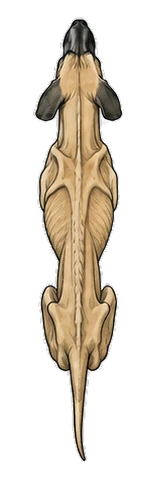
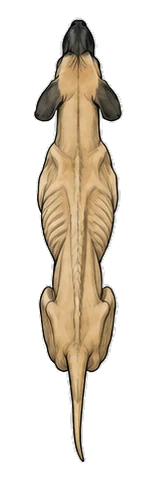
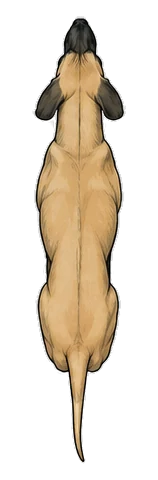
Body condition score
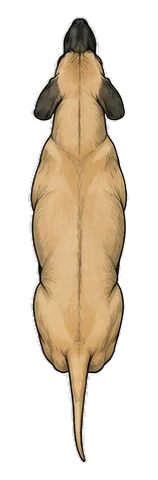
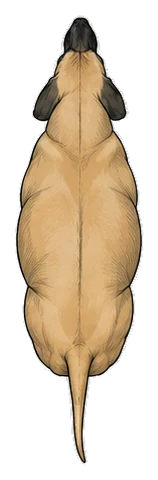
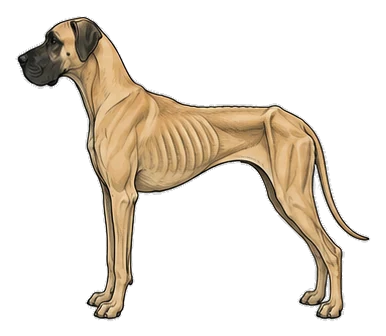
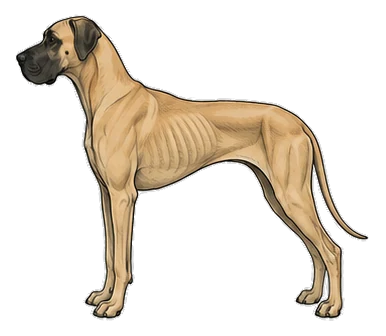
Feel for the ribs, look for a waist from above and a tummy tuck from the side.
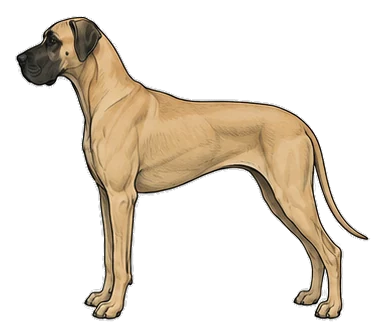
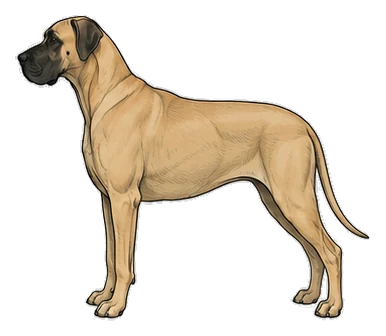
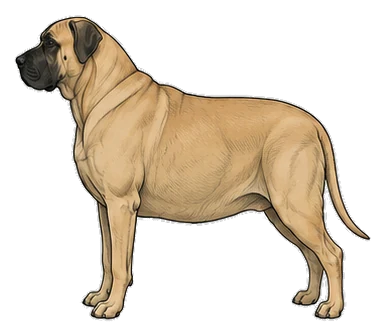
The slow-and-steady routine
- Weigh your puppy regularly. Weekly weighing is recommended. Adjust food so they gain a small, steady amount each week.[8]
- Score body condition on the WSAVA 9-point scale, where 4–5 is the goal for most dogs. One review suggests keeping growing large-breed puppies at about 4 out of 9.[30,31,13]
- Measured meals, rather than food left out all day, have been linked to less developmental orthopaedic disease in large and giant breeds. Overfeeding and rapid growth are recognised risk factors.[13,19]
- Vets are encouraged to check nutrition, including body and muscle condition, at every visit. Ask for it at puppy checks.[32]
Feed to lower the risk of bloat
Gastric dilatation-volvulus (GDV) progresses fast, and treatment works best early. Do not wait to see whether it settles. Phone ahead while someone else drives.[39]
- In high-risk breeds, dogs fed a larger volume per meal had higher GDV risk, highest when a large meal was fed once daily.[35]
- Puppies: three meals a day from weaning to 6 months, then two. The Great Dane Club of America suggests three to four meals, reducing to two by 6–9 months.[8,33]
- Adults: keep feeding at least twice daily for life.[33,38,39]
- In the same study, raised feed bowls were linked to higher risk. About 52% of GDV cases in the giant breeds were attributed to using one.[34]
- Great Danes were one of the 11 breeds in the study, which followed dogs forward in time rather than asking owners after the event.[34]
- The study was observational, which shows an association, not proof of cause. Vet guidance still advises avoiding raised bowls.[34,38]
- Common advice is to limit activity after meals, and Cornell lists exercise soon after eating as a risk factor.[38]
- However, a 2012 online owner survey of 2,551 dogs found that playing with other dogs and running the fence after meals was linked to lower risk, and suggested moderate daily and post-meal activity may help.[36]
- A reasonable middle path is gentle activity around meals, and saving hard running and rough play for well before or well after meals. Discuss this with your vet.[38,36]
- One modelling study estimated the lifetime risk of GDV in Great Danes at about 37% (95% CI 25–45%), the highest of five breeds examined.[37]
- Many veterinary surgeons recommend preventive gastropexy for at-risk breeds. It can be done by minimally invasive surgery, often at the same time as desexing.[39]
- After a GDV, gastropexy cuts the chance of it happening again to as low as 3–5%, compared with as high as 80% without it.[38]
Feeding calculator
Growing puppy: starting range
2,010–3,010 kcal/day
≈ 560–835 g a day · 2 meals of about 280–420 g
The range spans two published puppy equations. Published estimates can run high: one study found the NRC equation overestimated puppies' needs, and a Swiss study of eight breeds, including Great Danes, found about 80–90% of the recommended energy was enough for most puppies.[10,12]
Illustrative weight for 6.0 months with a 60 kg adult: about 45 kg[26]. This is a rough band from one small study, not a target. Body condition matters more than hitting a number.
Show the formula
- RER = 70 × 35.00.75 = 1,007 kcal/day[7,9]
- Rule of thumb: 2 × RER (from 4 months) = 2,015 kcal/day[7]
- NRC (2006) growth equation: 130 × 35.00.75 × 3.2 × (e−0.87 × 0.58 − 0.1) = 3,005 kcal/day, where p = current ÷ expected adult weight = 0.58[10,11]
- Where your puppy sits in this range is best found by weighing weekly and adjusting, aiming for a small, steady gain each week[8]. Activity and desexing are not used for growing puppies here.
- Food: 2,010–3,010 kcal ÷ 3,600 kcal/kg × 1000 = 560–835 g a day, split into 2 meals[8,33]
This is a starting estimate, not a prescription. Weigh weekly, score body condition, and adjust the amount so your Dane stays lean and grows steadily. Treats count towards the daily total. Check the plan with your vet, especially for puppies and dogs with health conditions.[8,30]