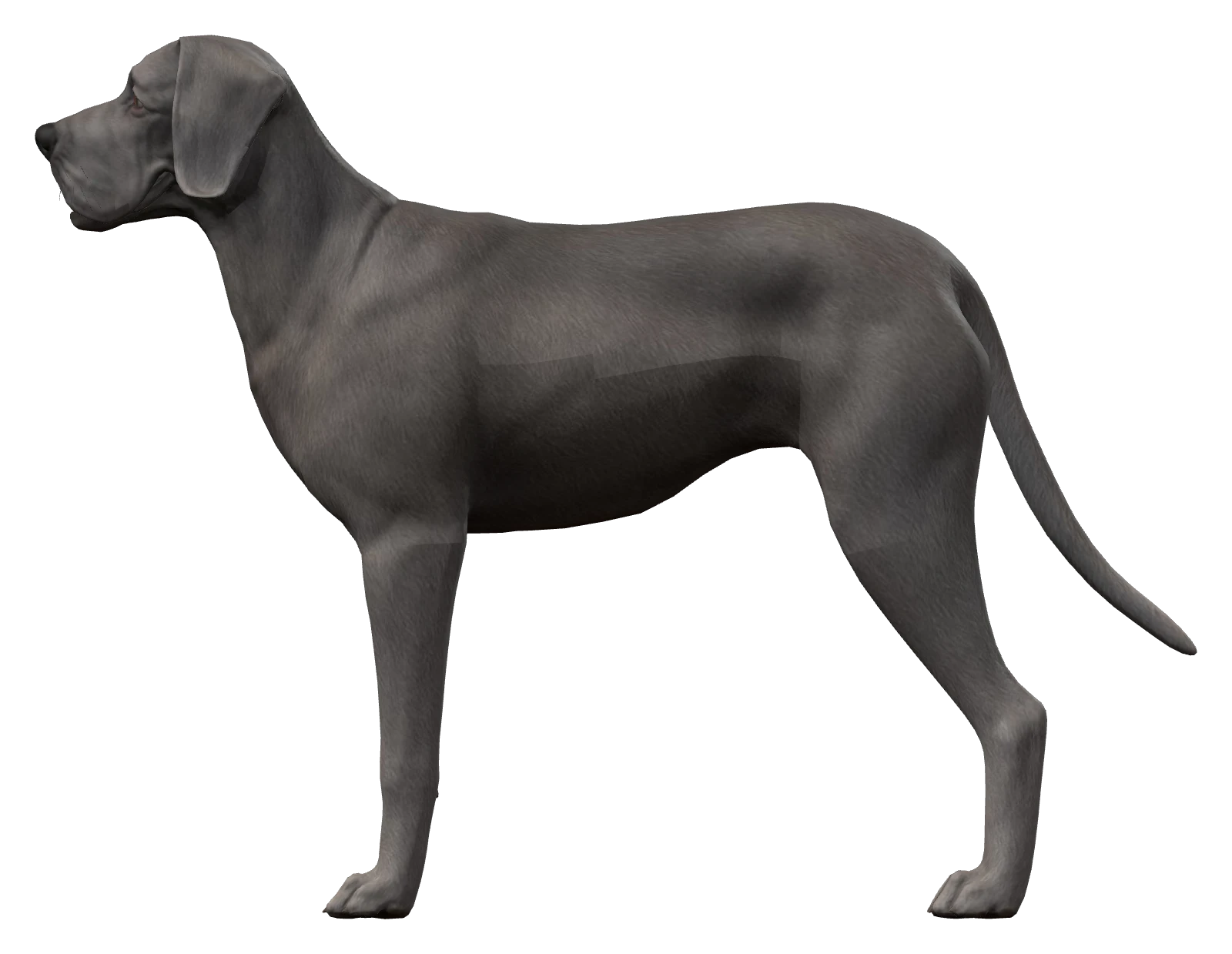
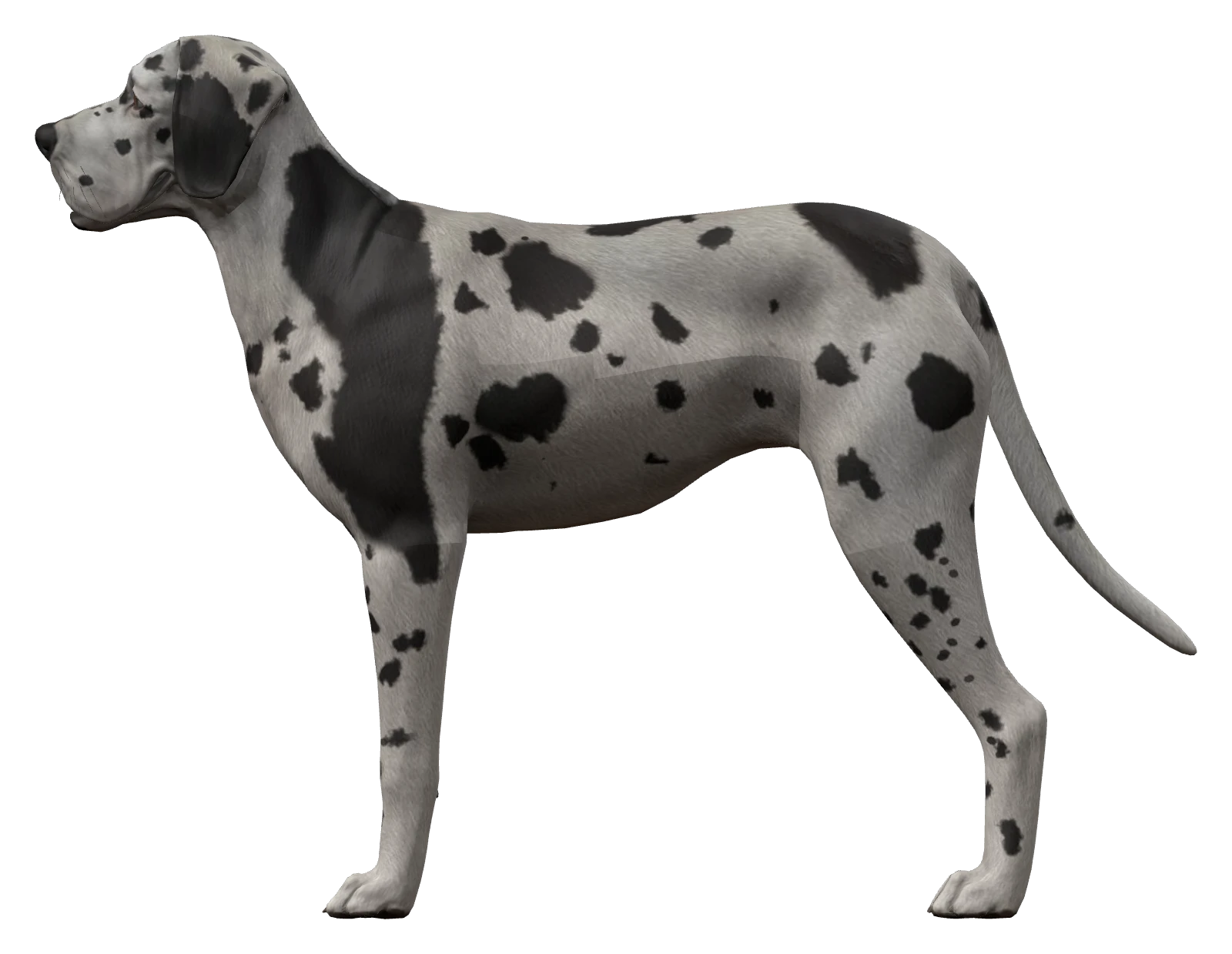
M/M
Double merle
- A double merle has two copies of merle (M/M). It comes from mating two dogs that both carry merle. In Great Danes that includes harlequins, because every harlequin is also a merle.[20,32]
- When two single merles (M/m) are mated, each puppy has a 25% chance of being a double merle.[40]
- Double merles are mostly white and are prone to several health problems.[40,31]
- They are sometimes called 'lethal whites', which misleads: harlequin breeding records counted 35 white (homozygous merle) pups. Combined with H, though, double merles seem to survive less often.[20,21]
Hearing
- In a BAER hearing study of 153 merle dogs, 10% of double merles were deaf in one ear and 15% in both. For single merles the figures were 2.7% and 0.9%.[24]
- Pigment-linked deafness happens when the blood supply inside the cochlea breaks down at about 3–4 weeks of age. It is thought to follow the loss of pigment cells caused by merle or piebald genes.[26]
- Only a BAER test can confirm deafness, especially deafness in one ear, which is easy to miss at home.[25,26]
Eyes and more
- Merle dogs, whether one or two copies, can show hearing and eye problems like those of Waardenburg syndrome in people.[14]
- In a study of Dachshunds, 11 double merles had severe eye defects in varying forms: small eyes (microphthalmia), small corneas, small or off-centre pupils, cataracts and colobomas (gaps in eye structures). Single merles showed milder changes, such as a missing tapetum (the eye's reflective layer) and a depigmented retina, which some double merles also had.[27]
- Double merles may also have skeletal and other defects.[31]
- A dog carrying a hidden, mosaic merle allele produced a double merle puppy born without eyes (anophthalmia).[19]
If you have one
- If you own a mostly white Dane from harlequin or merle breeding, ask your vet about a BAER hearing test.[25]
- Deaf dogs should not be bred.[26]
- To avoid producing double merles, breed a merle dog only to a dog that carries no merle at all, cryptic merle included.[40]
A deaf or visually impaired Dane is still a Dane. Talk to your vet about training and safety for a dog who can’t hear or see well.